
Themes
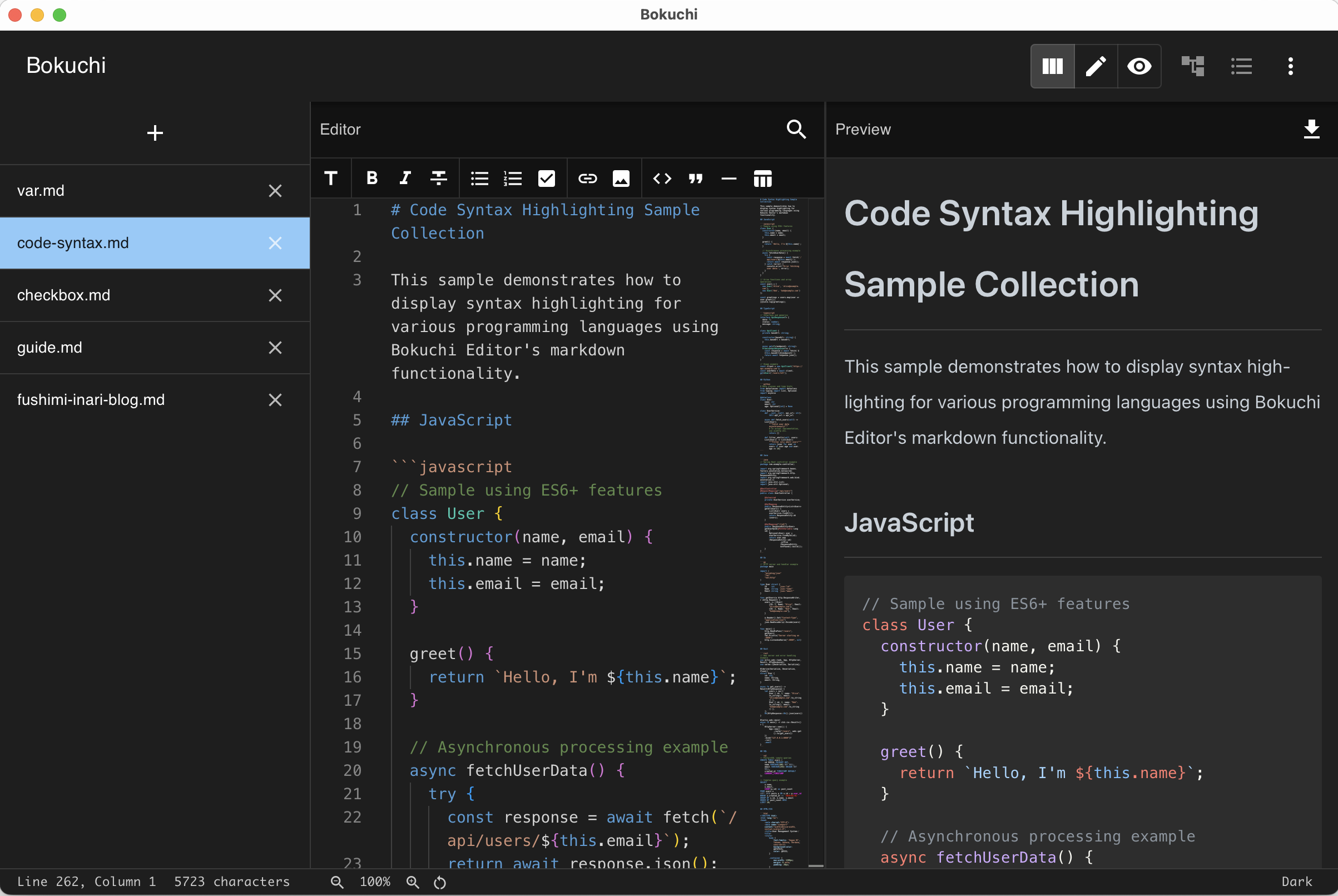
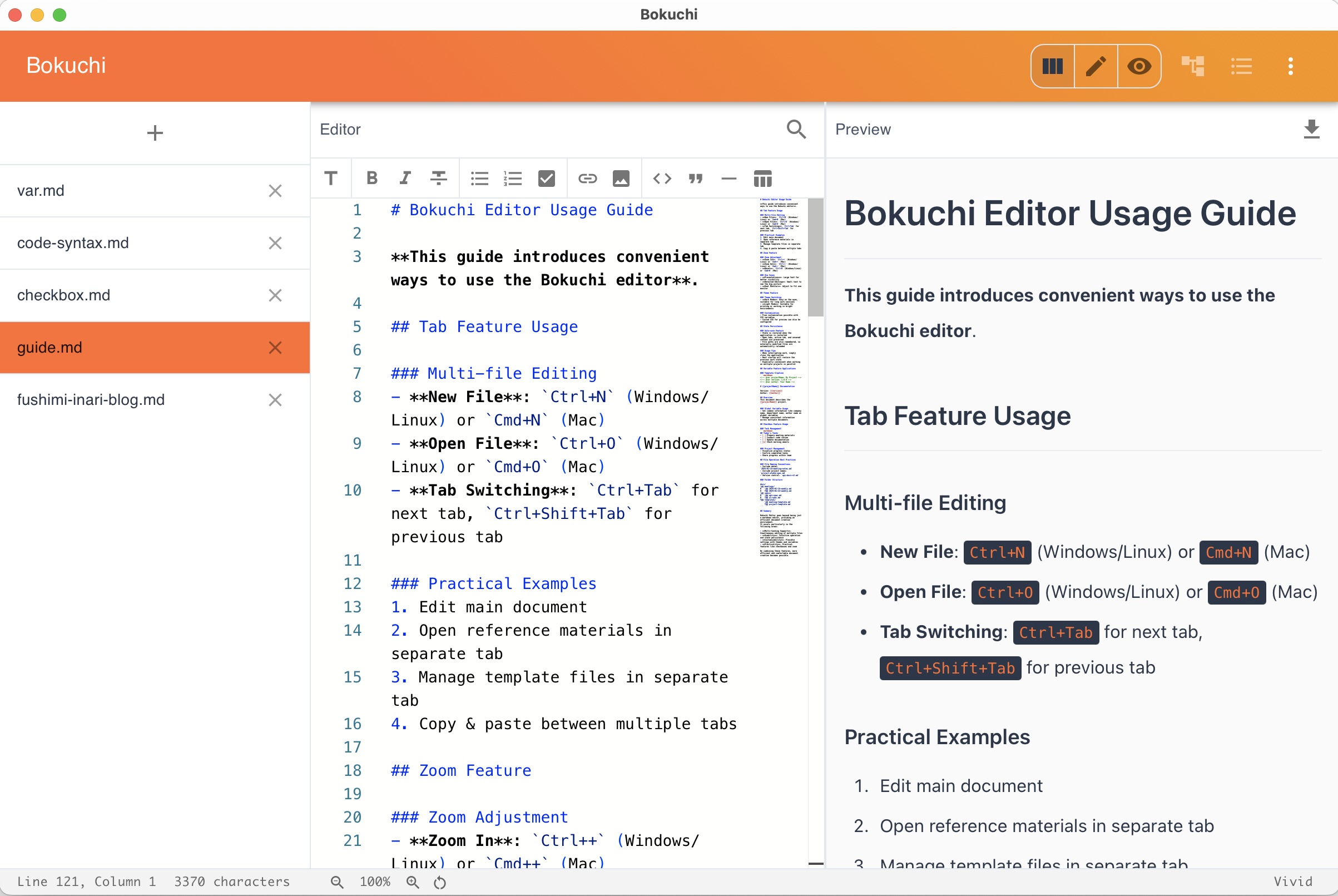
Bokuchi comes with 9 built-in themes to match your preference. You can also create your own custom themes based on any of them.
Available Themes
Section titled “Available Themes”| Theme | Type | Description |
|---|---|---|
| Default | Light | Clean light theme with blue accents (Material Design) |
| Dark | Dark | Dark background with light text, easy on the eyes |
| Pastel | Light | Soft, gentle colors with mint green and pink accents |
| Vivid | Light | Bold, vibrant colors with orange and purple accents |
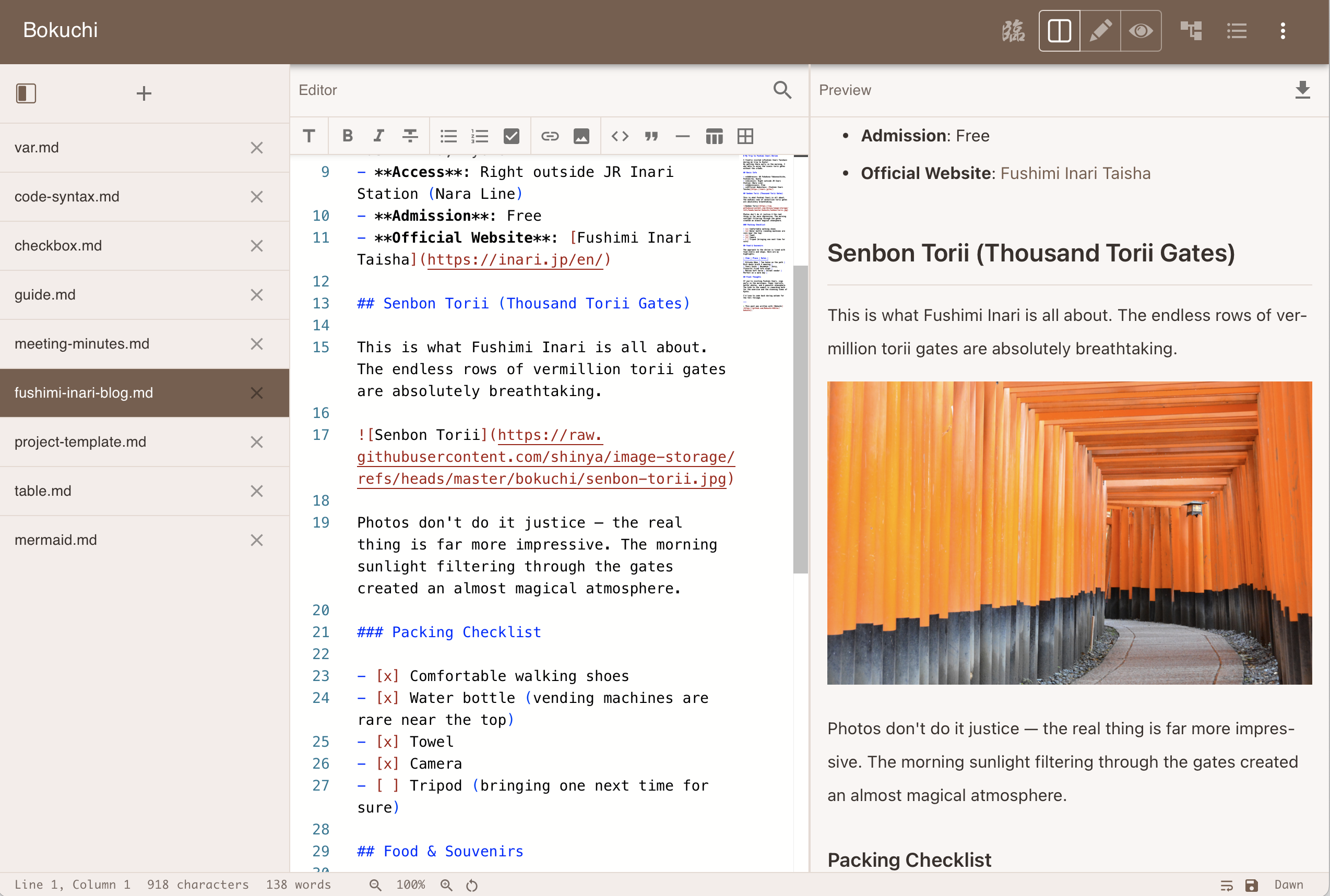
| Dawn | Light | Warm, soft light theme with a gentle terracotta tint, like a sunrise |
| Twilight | Dark | Dark theme with warm, golden tones, like a sunset |
| Silk | Light | Refined light monotone with a faint cool tint |
| Ink | Dark | Calm dark monotone with a faint cool tint |
| Darcula | Dark | Inspired by JetBrains IDEs, dark charcoal with warm syntax colors |
Default
Section titled “Default”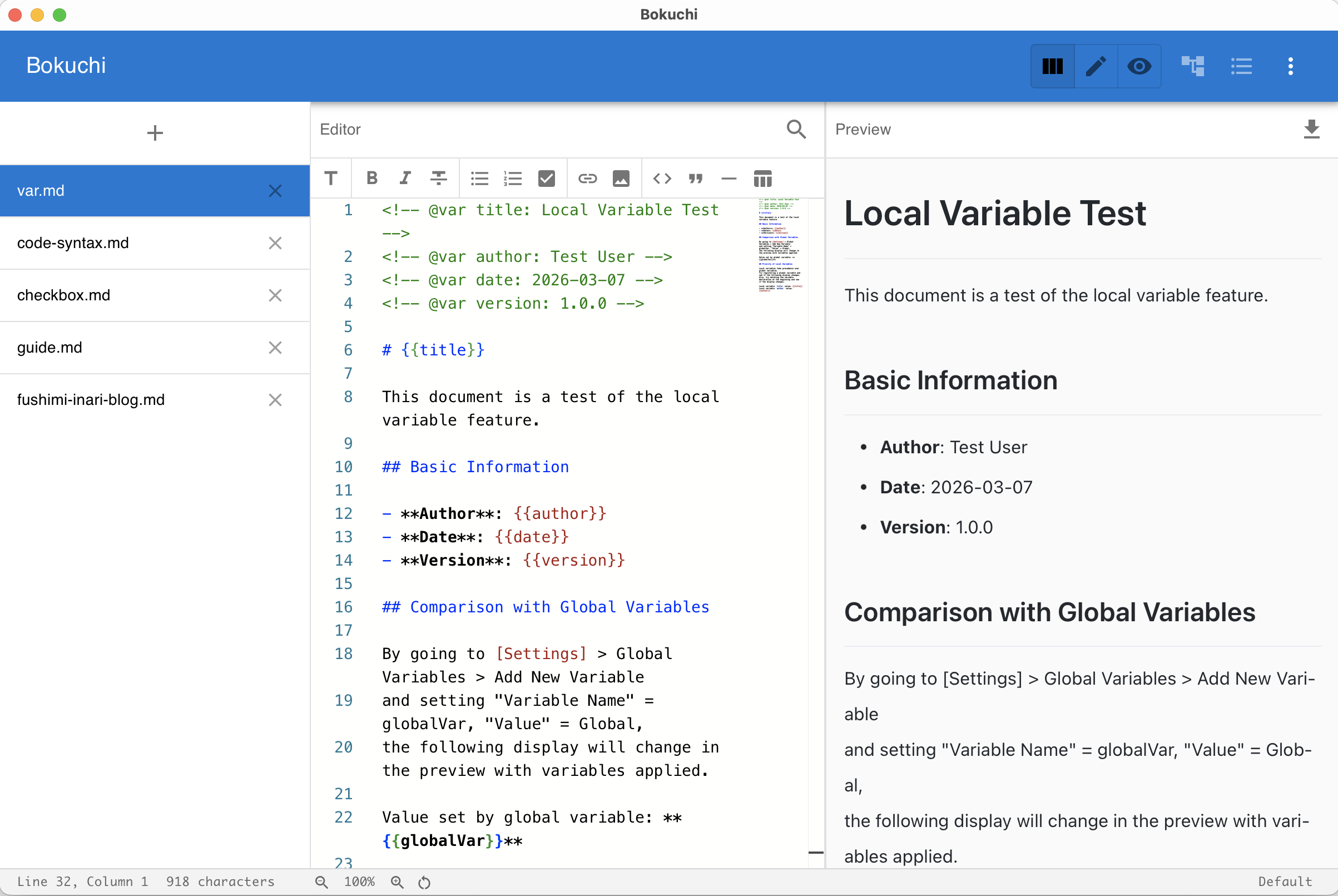
Pastel
Section titled “Pastel”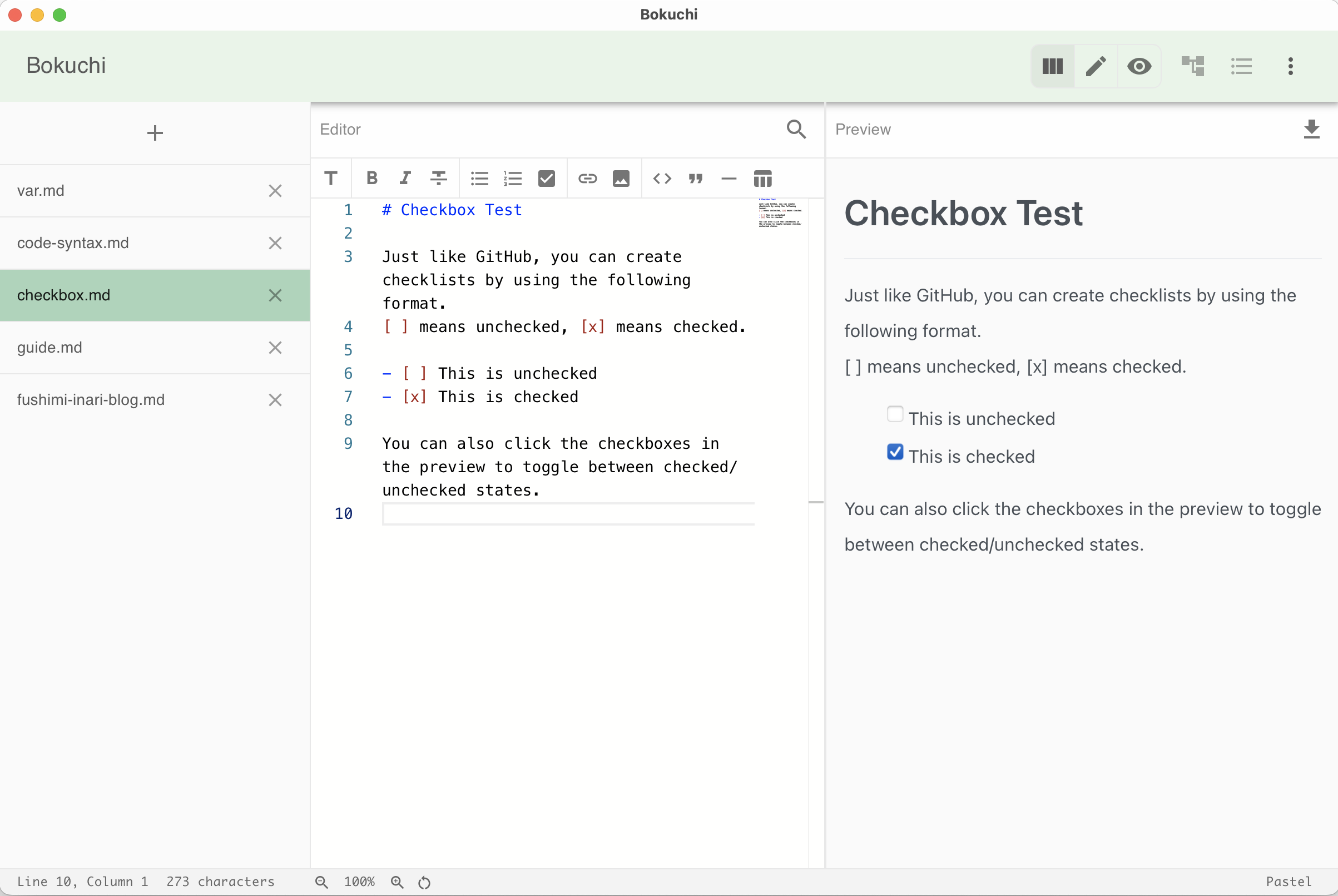
Twilight
Section titled “Twilight”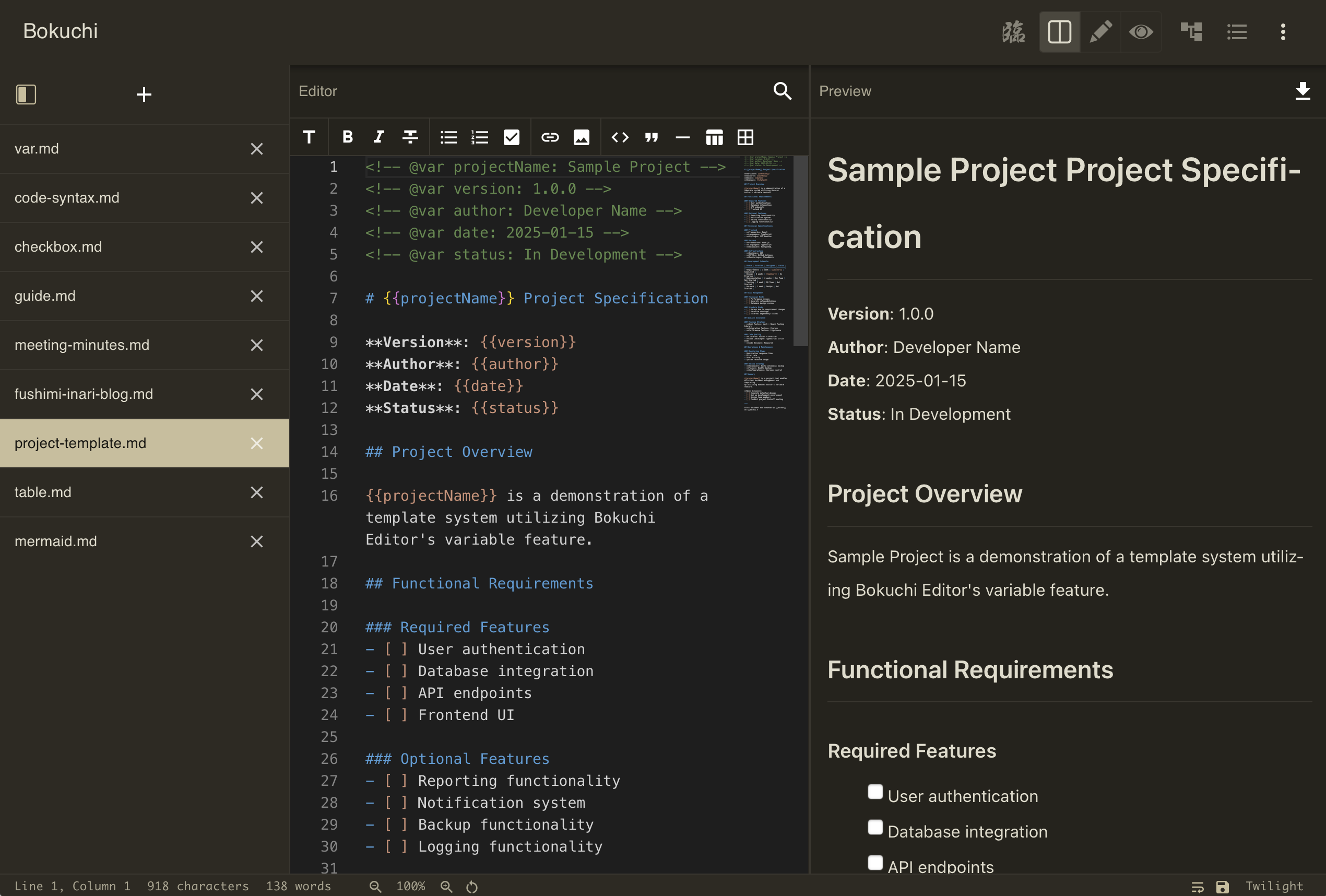
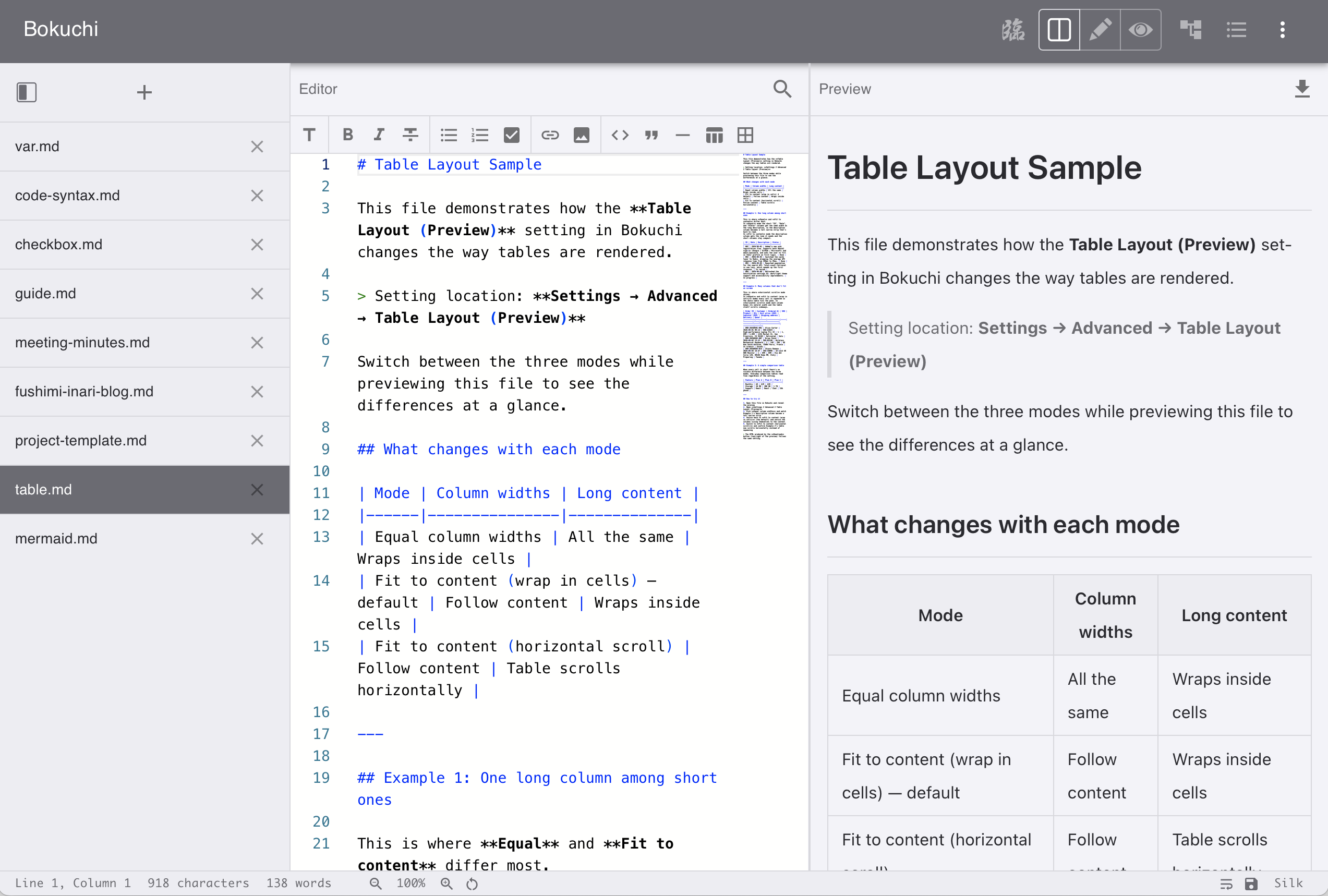
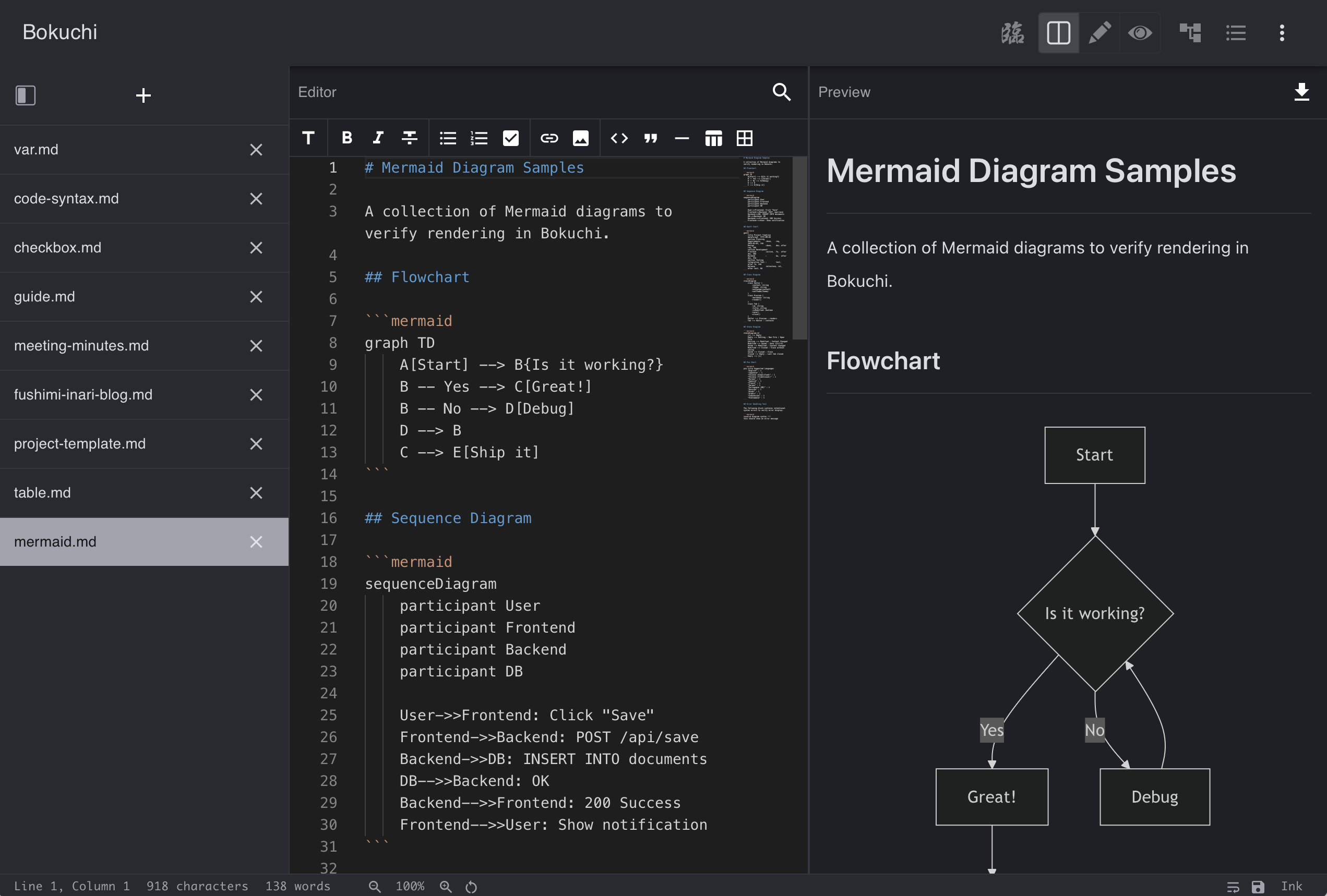
Darcula
Section titled “Darcula”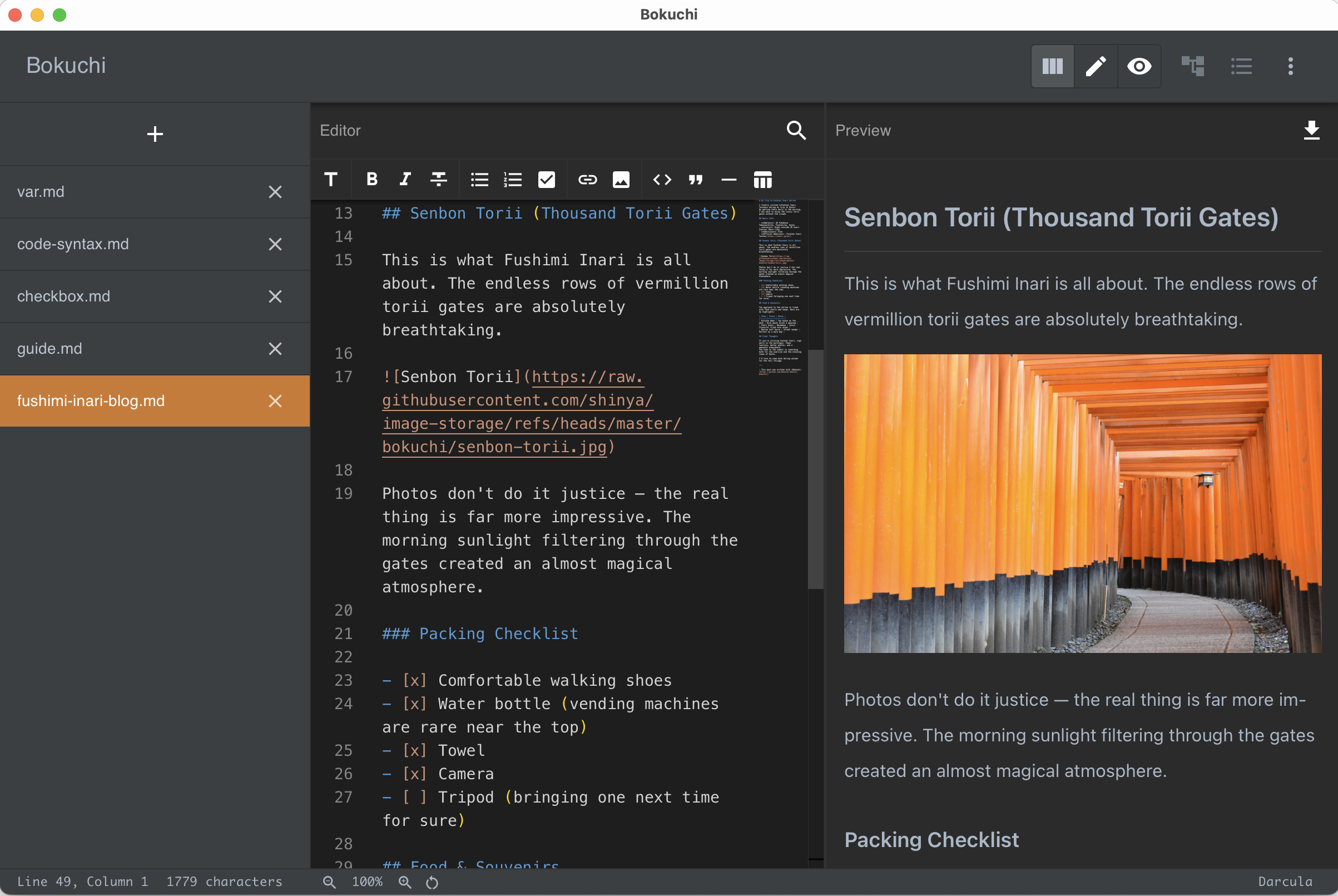
Changing the Theme
Section titled “Changing the Theme”There are two ways to switch themes:
From Settings
Section titled “From Settings”- Open Settings (Cmd+, on macOS / Ctrl+, on Windows/Linux)
- Go to the Appearance section
- Click a theme card to apply it. Hovering a card shows a small color preview
From the Status Bar
Section titled “From the Status Bar”Click the theme name displayed in the status bar at the bottom of the window. This provides a quick way to cycle through themes.
Custom Themes
Section titled “Custom Themes”Not quite happy with any of the built-in colors? You can create your own theme by duplicating an existing one and adjusting its colors.
- Open Settings > Appearance
- Click New Theme in the Custom Themes section
- Choose a base theme — your custom theme starts as a copy of it
- Adjust the colors in the editor that opens
You can change 7 colors: the window background, panel background, text, secondary text, two accent colors, and the divider color. Each color has a color picker and a hex field (like #1a2b3c), and your changes are applied to the whole app immediately so you can see the result as you go.
While editing you can also:
- Rename the theme — the name appears in the theme list and the status bar
- Reset colors to base — go back to the colors of the theme you started from
- Delete the theme when you no longer need it
If a text color and its background are too similar, Bokuchi shows a warning so you notice the text may become hard to read.
Theme Persistence
Section titled “Theme Persistence”Your theme choice — including custom themes — is saved automatically and will be restored the next time you open Bokuchi.